Wednesday, 31 October 2012
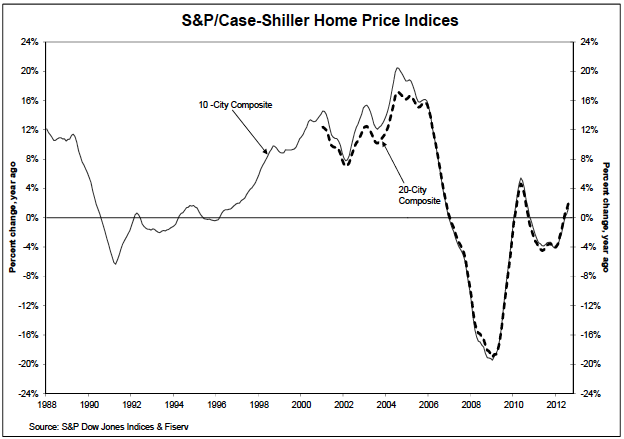
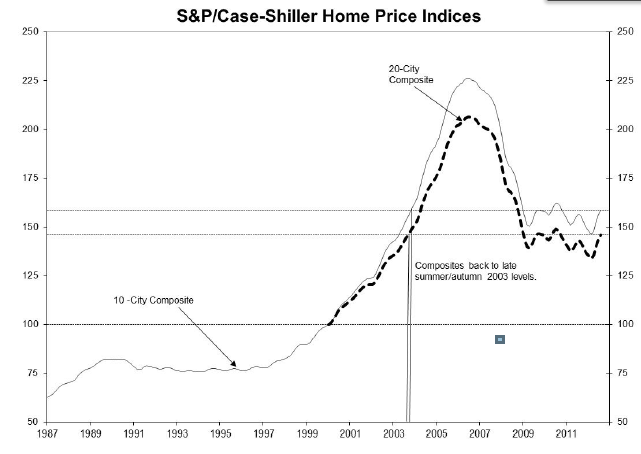
Home Prices Continued to Rise in August 2012 According to the S&P/Case-Shiller Home Price Indices.
To review this Latest Press Release: http://www.standardandpoors.com/indices/sp-case-shiller-home-price-indices/en/us/?indexId=spusa-cashpidff--p-us----
Tuesday, 30 October 2012
ZeroHedge: The Incredible Shrinking Half-Life Of Central Bank Action.
| Chart: SocGen |
Monday, 29 October 2012
Sunday, 28 October 2012
Friday, 26 October 2012
Larry Edelson: I’m also a realist.
No matter who wins the U.S. presidential election come November 6 ―
there is simply no way our country will ever make good on its
gargantuan debts and pile of IOUs that now total as much as $212
trillion.
Washington could raise taxes to 100% of your income, and the debt still wouldn’t be paid off. They could slash spending to zero, and the debt would not be paid off.
The same applies to Europe. It’s drowning in debt and there is simply
no combination of tax increases and austerity measures that will fix
its problems, either.
So what’s the solution then? It’s actually very simple.
The world needs a new monetary system. New “rules of the game,” as central bankers like to call them.
Or a “new financial architecture” — the term used by many academics. A new “Bretton Woods.”
Thing is, that’s where we’re headed. Toward a new monetary system. But getting there won’t be easy.
Right now, for instance, the world is mostly caught up in competitive currency devaluations. No country wants a currency that’s too strong for fear it will hurt exports and aggravate deleveraging and deflation.
So the Fed prints money. Ditto for the European Central Bank. In fact, almost all major central banks are now printing money. They all think that money-printing will inflate away debt, cheapen their currency, revive exports and fix unemployment.
But the fact of the matter is that no amount of money-printing will solve any of those problems.
It’s not going to solve unemployment in the U.S. or in Europe. It’s not going to get rid of unpayable debts. It’s not going to fix unfunded pensions, Social Security, Medicare.
It’s not going to rescue Europe’s zombie banks and governments.
And it’s not going to build real wealth for anyone.
At best, all it will do is artificially inflate asset prices.
Meanwhile, the massive debts our country — and Europe — has will continue to mount. The cost of servicing the rising debt will become more and more burdensome.
And this will go on until the entire house of cards on both sides of the Atlantic comes crashing down.
We’ve already seen the first phase hit, and pass. We’re now in the middle of the eye of the storm, where there’s relative calm. But soon, the next phase, the next wave of the storm will hit.
It will be the worst phase of this great financial crisis. It will tear apart everything you thought you knew about the world, about your world, about your wealth, your children’s future, your grandchildren’s future.
It’s where gold will soar to well over $5,000 per troy ounce. Silver to over $150. Oil to near $200. Food prices to the moon. Interest rates surging. And more.
And then, when the house of cards finally comes crashing down, world leaders will finally get together to change the world’s monetary system to wipe out and forgive bad debts and to start anew with a fresh balance sheet.
In the end, when it finally becomes apparent that no amount of money-printing, tax hikes or austerity measures will fix the sovereign-debt problems of Europe and the United States, world leaders will meet and agree to two basic steps for the foundation of a new world monetary system ...
Monetize most, if not all, of the Western world’s debt (temporarily sending gold to well over $5,000 an ounce).
Create a new world reserve currency, tied to a commodity basket and administered by the International Monetary Fund.
I also suspect that at some point, as far-fetched as it may sound, world leaders will also consider a debt-free banking system. One that mimics, at least in part, the Islamic banking system where Sharia law forbids usury and interest and, instead, works on the basis of “Profit-Loss Sharing,” or PLS. Put another way, the bank becomes your partner in your home or your business, instead of a lender.
We have a long road ahead of us. But as I said at the outset, I believe the crisis the world is going through will eventually give birth to a better world for all of us.
It just won’t be easy getting there. It will be a trip through hell.
Right now, most markets are still consolidating and looking like they will retest important support levels, as I have been expecting. Gold is starting to slide; so are silver, oil and many other commodities.
So while downside is still present, and there are opportunities to make money on the downside, never forget that there is one asset — bar none — that you should own for the longer term.
It’s gold. There is nothing better than gold. If you own gold already, hold, and wait for my signals to add more gold. If you don’t own gold, get ready to buy — either on a decline back to major support levels, or a full-blown breakout to the upside above $1,823.
Washington could raise taxes to 100% of your income, and the debt still wouldn’t be paid off. They could slash spending to zero, and the debt would not be paid off.
So what’s the solution then? It’s actually very simple.
The world needs a new monetary system. New “rules of the game,” as central bankers like to call them.
Or a “new financial architecture” — the term used by many academics. A new “Bretton Woods.”
Thing is, that’s where we’re headed. Toward a new monetary system. But getting there won’t be easy.
Right now, for instance, the world is mostly caught up in competitive currency devaluations. No country wants a currency that’s too strong for fear it will hurt exports and aggravate deleveraging and deflation.
So the Fed prints money. Ditto for the European Central Bank. In fact, almost all major central banks are now printing money. They all think that money-printing will inflate away debt, cheapen their currency, revive exports and fix unemployment.
But the fact of the matter is that no amount of money-printing will solve any of those problems.
It’s not going to solve unemployment in the U.S. or in Europe. It’s not going to get rid of unpayable debts. It’s not going to fix unfunded pensions, Social Security, Medicare.
It’s not going to rescue Europe’s zombie banks and governments.
And it’s not going to build real wealth for anyone.
At best, all it will do is artificially inflate asset prices.
Meanwhile, the massive debts our country — and Europe — has will continue to mount. The cost of servicing the rising debt will become more and more burdensome.
And this will go on until the entire house of cards on both sides of the Atlantic comes crashing down.
We’ve already seen the first phase hit, and pass. We’re now in the middle of the eye of the storm, where there’s relative calm. But soon, the next phase, the next wave of the storm will hit.
It will be the worst phase of this great financial crisis. It will tear apart everything you thought you knew about the world, about your world, about your wealth, your children’s future, your grandchildren’s future.
It’s where gold will soar to well over $5,000 per troy ounce. Silver to over $150. Oil to near $200. Food prices to the moon. Interest rates surging. And more.
And then, when the house of cards finally comes crashing down, world leaders will finally get together to change the world’s monetary system to wipe out and forgive bad debts and to start anew with a fresh balance sheet.
In the end, when it finally becomes apparent that no amount of money-printing, tax hikes or austerity measures will fix the sovereign-debt problems of Europe and the United States, world leaders will meet and agree to two basic steps for the foundation of a new world monetary system ...
I also suspect that at some point, as far-fetched as it may sound, world leaders will also consider a debt-free banking system. One that mimics, at least in part, the Islamic banking system where Sharia law forbids usury and interest and, instead, works on the basis of “Profit-Loss Sharing,” or PLS. Put another way, the bank becomes your partner in your home or your business, instead of a lender.
We have a long road ahead of us. But as I said at the outset, I believe the crisis the world is going through will eventually give birth to a better world for all of us.
It just won’t be easy getting there. It will be a trip through hell.
Right now, most markets are still consolidating and looking like they will retest important support levels, as I have been expecting. Gold is starting to slide; so are silver, oil and many other commodities.
So while downside is still present, and there are opportunities to make money on the downside, never forget that there is one asset — bar none — that you should own for the longer term.
It’s gold. There is nothing better than gold. If you own gold already, hold, and wait for my signals to add more gold. If you don’t own gold, get ready to buy — either on a decline back to major support levels, or a full-blown breakout to the upside above $1,823.
Thursday, 25 October 2012
John Perkins: What wrecked our economy & how to fix it!
On October 9th, 2012, in Reykjavik, Iceland, Yoko Ono gave JOHN PERKINS along 4 other activists (LADY GAGA, RACHEL CORRIE, CHRISTOPHER HITCHENS, PUSSY RIOT) the Biennial John LENNON ONO GRANT FOR PEACE 2012 http://www.visitreykjavik.is/desktopdefault.aspx/tabid-135/247_read-2816
The annual lighting of IMAGINE PEACE TOWER took place in the evening at 8pm local time on the island of Viưey in Reykjavik, Iceland in honor of all the activists of the world; past, present and future. She asks everyone to join together and let the power of light become a collective expression of the desire for peace and harmony on the planet.
| Dazzling northern lights as they dance against the night sky around the light tower. |
IMAGINE PEACE TOWER was relit by Yoko Ono in Reykjavik on Oct 9th 2012. It will relight every night until Dec 8th, then Dec 21st–28th & Dec 31st 2012.
Wednesday, 24 October 2012
No comment!
| That should get your brain-cells twitching! |
China knows that the gold market is rigged: http://www.marketwatch.com/story/china-knows-that-gold-is-rigged-2012-10-24?mod=wsj_share_tweet
10 institutions that control the world's gold: http://www.marketwatch.com/story/10-nations-that-control-the-worlds-gold-2012-10-20?link=sfmw
Chart via @zerohedge
Blindsided by QE: Why Global Investors Can't See Geopolitical Threats that May Drive Markets Sharply Lower.
Forbes: Global investors are in danger of being so blindsided by several rounds of Quantitative Easing (QE) by the FED, the ECB, and Bank of Japan that they cannot see the geopolitical threats which could unsettle financial markets — and wind up costing those who are on the wrong side of the market a great deal of money.
I’m talking about the proliferation of the European sovereign debt crisis, and the escalation of crises in the Middle East and between China and Japan.
The bottom line: QE may offer complacency to global investors. But it can’t eliminate economic and political risks that threaten to disrupt trade and financial flows across countries.
Full article here: http://www.forbes.com/sites/panosmourdoukoutas/2012/10/19/blindsided-by-qe-why-global-investors-cant-see-geopolitical-threats-that-may-drive-markets-sharply-lower/
I’m talking about the proliferation of the European sovereign debt crisis, and the escalation of crises in the Middle East and between China and Japan.
The bottom line: QE may offer complacency to global investors. But it can’t eliminate economic and political risks that threaten to disrupt trade and financial flows across countries.
Full article here: http://www.forbes.com/sites/panosmourdoukoutas/2012/10/19/blindsided-by-qe-why-global-investors-cant-see-geopolitical-threats-that-may-drive-markets-sharply-lower/
Tuesday, 23 October 2012
Monday, 22 October 2012
Harvard psychology professor and bestselling author Steven Pinker: Taboos,Political Correctness & Dissent.
Record Container Ship Deliveries Expected in 2013.
Oct.19--2013 will see a record number of container ship deliveries, which will boost the global fleet by 9.5%.
Read more: http://en.sse.net.cn/info/detailen.jsp?id=307849
Oct.19--European shippers expect trade volumes on their trade lanes to continue to decline ,according to the latest Stifel Nicolaus Logistics Confidence Index.
Read more: http://en.sse.net.cn/info/detailen.jsp?id=307851
Read more: http://en.sse.net.cn/info/detailen.jsp?id=307849
Oct.19--European shippers expect trade volumes on their trade lanes to continue to decline ,according to the latest Stifel Nicolaus Logistics Confidence Index.
Read more: http://en.sse.net.cn/info/detailen.jsp?id=307851
| Harpex Index |
Ashraf Laidi: History Favouring Euro’s Trend Breakout - October 18, 2012.
In each of the last six cases since 2002, whenever EUR/USD broke
above one of its three main long-term moving averages (55, 100 or 100
week MAs), it proceeded to break above the other two moving averages.
With EUR/USD breaking above its 55-week moving average, it is set to
cross above its 100-WMA (currently 1.3430) and 200-WMA (1.3533), which
are 3.50% and 3.70% above the current market price of $1.3099. The road
to $1.35 remains intact.

Spain 10-year yields are down 50-bps from Sep 28 piece “Win-Win for Bonos & BTPs?”, while Italian 10-year yields (BTPs) are seven-month lows below 4.80%.
Meanwhile in Greece, EU officials may finally approve the €31.5bn tranche of the €130bn rescue package. Even Germany is insisting that the remaining installment (originally due to be paid in June), will be released after ‘troika’ team complete its report on Greece’s compliance with reforms and austerity measures. One factor increasing the probability of Greece’s passing the “Troika Test” is the possible establishment of a special account for Athens to channel assistance from EU & IMF. The account will be strictly aimed at debt servicing instead of easing budget strains.
Italy 10-year yield breaks below key trendline. The 200-month moving average is also under assault. If this important moving average is not re-established below the yield by end of month, the follow-through to 4.50% is most likely as will likely be the case for 5% yield in 10-year Spanish bonos. Such are two of the main ingredients for $1.35 EUR/USD recipe.
Spain 10-year yields are down 50-bps from Sep 28 piece “Win-Win for Bonos & BTPs?”, while Italian 10-year yields (BTPs) are seven-month lows below 4.80%.
Meanwhile in Greece, EU officials may finally approve the €31.5bn tranche of the €130bn rescue package. Even Germany is insisting that the remaining installment (originally due to be paid in June), will be released after ‘troika’ team complete its report on Greece’s compliance with reforms and austerity measures. One factor increasing the probability of Greece’s passing the “Troika Test” is the possible establishment of a special account for Athens to channel assistance from EU & IMF. The account will be strictly aimed at debt servicing instead of easing budget strains.
Italy 10-year yield breaks below key trendline. The 200-month moving average is also under assault. If this important moving average is not re-established below the yield by end of month, the follow-through to 4.50% is most likely as will likely be the case for 5% yield in 10-year Spanish bonos. Such are two of the main ingredients for $1.35 EUR/USD recipe.
Noam Chomsky: "The Emerging World Order: its roots, our legacy".
A public lecture held on September 17, 2012 at Politeama Rossetti in Trieste, Italy.
Fifty years later, Noam Chomsky reminds us of just how close we truly got to a self-induced apocalypse and why it came to that. It’s a chilling tale about the imperial urge to control the world, one that still couldn’t be more relevant TODAY.
Subscribe to:
Posts (Atom)
